
Section outline
-
 Learn the key facts about lumpy skin disease (LSD) in cattle in this short video.
Discover how LSD spreads, its impact on animal health and production, and why early detection is crucial for veterinarians. This session helps strengthen understanding and improve response to LSD.
-
 Here are five key facts we learnt in this video:
-
Lumpy skin disease (LSD) is an infectious disease of cattle and water buffalo caused by the LSD virus, belonging to the Capripoxvirus genus.
-
LSD is non-zoonotic and does not infect humans.
-
The disease is mainly transmitted by vectors such as mosquitoes, flies, and ticks, especially in warm and wet climates.
-
LSD causes nodules on the skin and mucous membranes, leading to significant economic losses from reduced milk production, skin damage, fertility problems, and control costs.
-
Early detection of clinical signs and understanding transmission routes are critical for veterinarians to control outbreaks and advise on biosecurity measures.
If you want to learn more, you can enroll in the Introduction to LSD open access course:
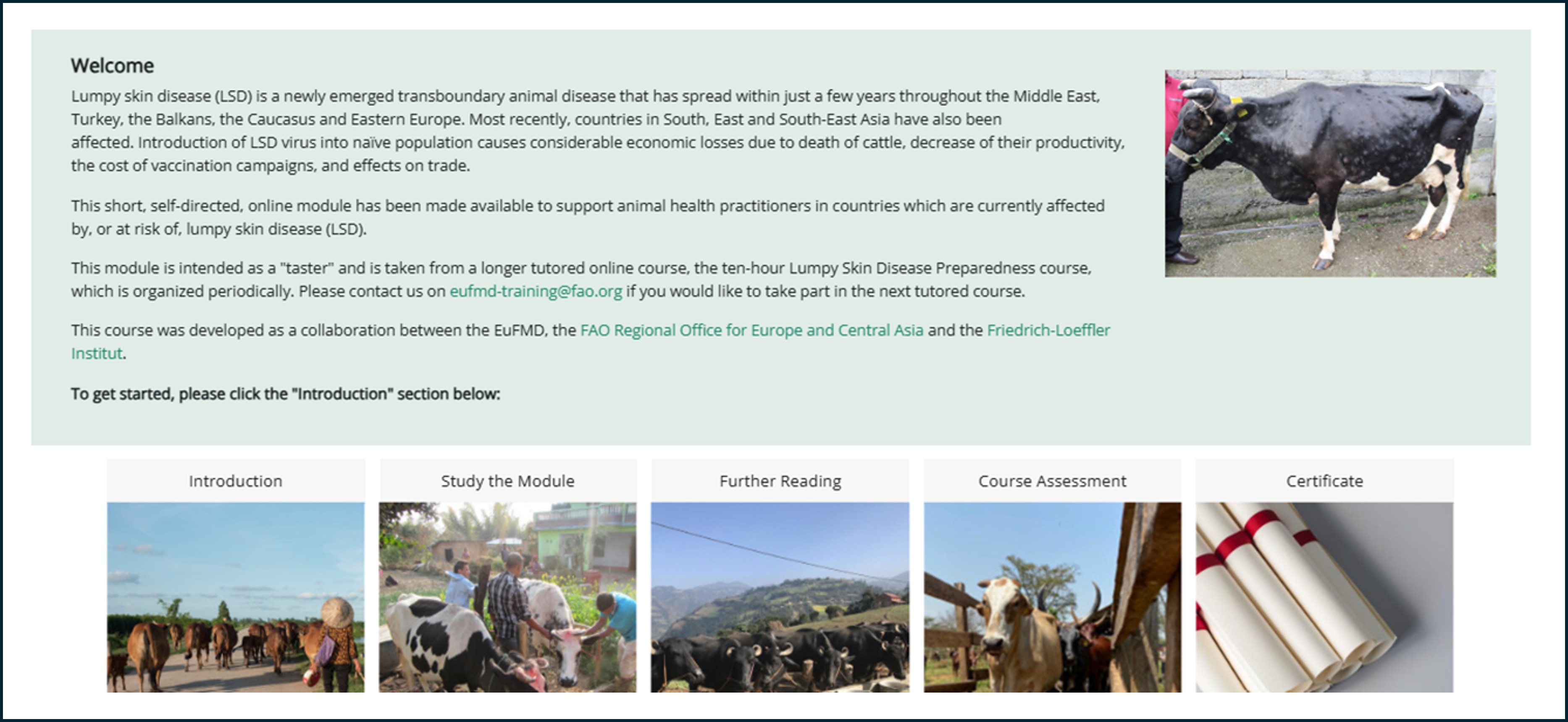
This course will provide you an overview of distribution of LSD, clinical signs, impact, characteristics of the virus and epidemiology.
In next session we will learn more about clinical signs.
-
-